AI Can Write the Code. That Does Not Mean Anyone Can Build the System
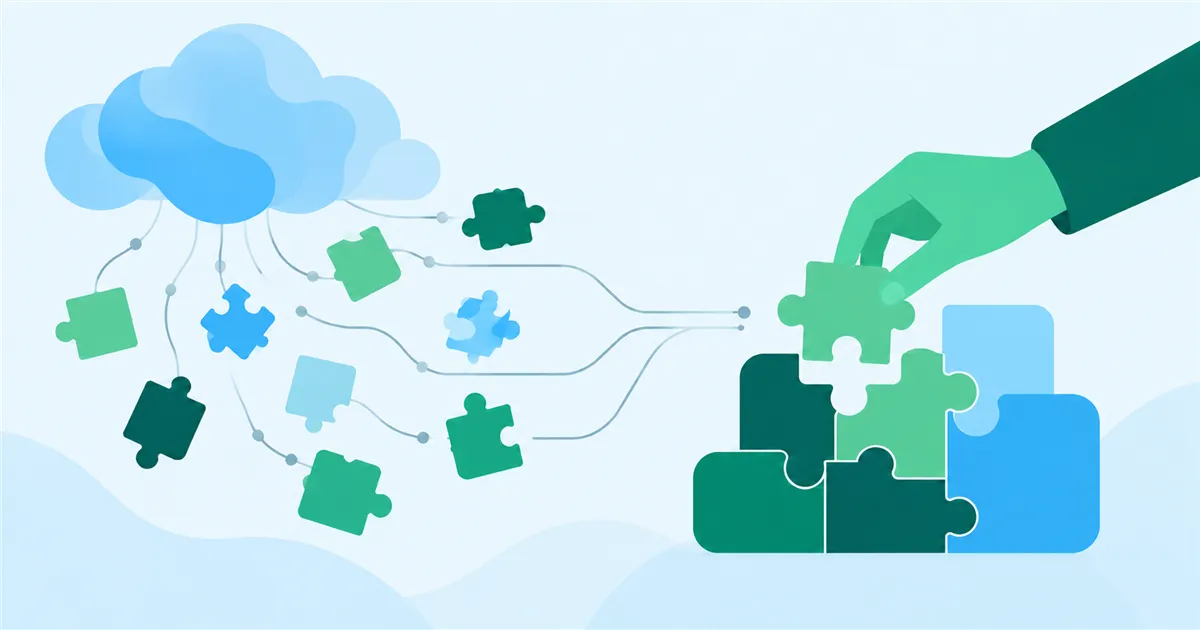
Engineers increasingly do not need to type every line that AI can produce reliably. But being able to ask AI for code is not the same as completing the intended system and keeping it dependable as it changes. Human work is moving away from manual code entry and toward sharing intent, gathering evidence, making decisions, and verifying that those decisions remain true in the resulting system.
Programming has always involved input
Since generative AI arrived, a familiar claim has returned in a new form: anyone can build software because all they need to do is type a request.
Programming has always involved entering instructions into a computer. Developers read books and documentation, copied sample code, and assembled fragments found through search. Long before generative AI, people said that anyone could build software by copying and pasting examples.
That can be true when the goal is to make something run once under the same conditions as the example. AI has made that starting point accessible to many more people.
But the author of a useful example has already made many decisions. They chose the environment, design, dependencies, and error-handling assumptions. Copying can look effortless because someone else made those decisions first.
AI changes the source of the implementation. Instead of finding a fixed example, we can generate a new one for the task at hand. That also makes the boundary between borrowed decisions and decisions we still need to make much harder to see.
The autocomplete phase is no longer the whole story
AI-assisted development is moving beyond the workflow in which a person thinks of the next line, AI suggests it, and the person accepts it with the Tab key. That model mainly made human typing faster.
Today, a developer can provide a goal and constraints, ask an agent to inspect a codebase, let it change several files, run tests, and revise its work after a failure. A human does not need to dictate every line.
Humans type every character
    ↓
Humans copy sample code
    ↓
AI completes a line or function
    ↓
AI receives a change as a unit of work
    ↓
AI investigates, implements, tests, and revises
This does not mean every edit should be delegated. Manually changing a few obvious lines may be faster than instructing an agent to do it. The point is that manual authorship is not evidence of quality or effort. The useful measure is how quickly and reliably the work reaches the required outcome.
More people can start, but not everyone can finish
AI can make the first demo remarkably fast. The difficulty often appears after that.
- Fixing one behavior breaks another
- A feature that used to work disappears
- The product gradually drifts away from its original intent
- Similar responsibilities spread across several parts of the codebase
- Nobody can explain why a change was made
- The impact of another change becomes too uncertain to risk
The underlying problem is not simply that AI makes coding mistakes. Work accumulates without a shared understanding of what the human and AI are trying to build.
Nor can this be solved by writing one perfect prompt or a complete specification at the beginning. People do not always know every relevant condition before the investigation and prototypes begin. Some constraints only become visible during the work.
What matters is not a phrase that produces the right answer in one attempt. It is a method for keeping the shared understanding current.
State the goal
    ↓
Let AI investigate the current system
    ↓
Ask it to surface questions and alternatives
    ↓
Make the decisions that require human intent
    ↓
Have AI restate the specification and affected areas
    ↓
Implement and verify a small change
    ↓
Update the goal, specification, and tests from the result
This is not about prompt tricks or eloquence
When people hear that communication with AI matters, they may assume success belongs to those who write long prompts, have a large vocabulary, or know special phrases that make a model cooperate.
That is not the skill that matters.
- Find what is still ambiguous
- Separate the current state from the desired state
- Distinguish constraints from details that may change
- Understand the consequences of the available options
- Decide what is explicitly out of scope
- Notice when the result has drifted from the intent
If an idea is hard to explain, let AI ask questions. Prose is not the only way to communicate intent. Existing code, screens, logs, diagrams, tests, examples, and counterexamples can all contribute to the shared understanding.
The scarce skill is not eloquence. It is finding ambiguity, making the necessary judgment, and recording that judgment in a form that can be verified.
Humans turn AI-generated options into decisions
AI can produce alternatives, compare tradeoffs, recommend an approach, and implement that recommendation.
When several answers are valid, however, humans still decide what to prioritize and which constraints or losses to accept, and they remain accountable for the result.
- Is stronger protection worth an extra step for the user?
- Is more automation worth a larger impact when it misfires?
- Is compatibility worth additional design complexity?
- Is meeting the deadline worth postponing part of the scope?
These questions do not have one answer waiting to be recovered from the code or documentation. When AI asks about them, it is not testing the user’s conversational ability. It has reached a point where the system cannot be defined without human intent.
This does not justify arbitrary choices. A sound decision depends on the goal, the current state, constraints, affected areas, available evidence, and acceptable risk. When the evidence is insufficient, the right action may be a small experiment or a decision to wait.
Decision-making is not the same as making a fast choice. It includes distinguishing what humans must decide, what can safely be delegated, and what should not be decided yet. It also includes revising a decision when the observed result contradicts the assumptions behind it.
Less memorization does not mean less understanding
A production environment is not an examination room. There is no inherent value in recalling every command, syntax rule, or library function without assistance. Engineers can consult documentation, search, or ask AI.
But removing the need for memorization does not remove the need for understanding.
When AI says that an implementation is sound, a person without a technical foundation may not notice that:
- Authentication and authorization have been confused
- Secrets are stored in the wrong place
- Data consistency can be lost
- Effects on another component were omitted
- The system cannot recover after a failure
- Assumptions about the network or runtime do not match reality
- The implementation and its tests share the same misunderstanding
Engineers do not need to retain every detail of syntax. They do need a mental model of how the system is connected, where state lives, which boundaries data and authority cross, and where failures can occur. That is an architectural perspective.
Experience is not merely the number of years spent typing code. It is knowing which parts tend to fail, what must be checked before a change is safe, and why an apparently successful result may still deserve suspicion.
Review must move from lines of code to the system
System-level review is not a new invention created by AI. It is what review should always have tried to accomplish.
When people wrote every implementation, local mistakes were common: a missing condition, incomplete exception handling, or incorrect API use. Reviewers spent much of their limited attention reading diffs line by line to find those defects. They could run out of time and concentration before reaching the more important question: is this change solving the right problem?
Local checks do not disappear. But static analysis, tests, review agents, and implementation agents can increasingly form a repair loop around them. Human attention can move toward larger questions.
- What problem is this change intended to solve?
- Which assumptions did AI introduce?
- Are the boundaries of responsibility, state, data, and authority correct?
- Which existing behaviors and other components can this change affect?
- What happens during a timeout, restart, disconnection, or partial success?
- Can the system return to a safe state after failure?
- What evidence shows that the desired state was reached?
- What remains unverified?
Every line can look plausible while the system as a whole is wrong. Review must ask more than whether the code is correct. It must ask whether the change left the entire system in the intended state.
In AI-assisted development, the most valuable review examines the assumptions, decisions, affected areas, failure behavior, and evidence behind the code.
Unit tests alone cannot explain quality
Unit tests remain valuable. They provide fast feedback for calculations, logic with clear inputs and outputs, boundary values, error conditions, and state transitions.
AI can also generate large numbers of unit tests alongside an implementation. If both are based on the same misunderstanding, AI can implement the wrong specification and produce tests that certify the same mistake. High code coverage does not prove that important failures have been tested.
Quality needs more than one coverage dimension.
- Are requirements and decisions represented?
- Are important state transitions exercised?
- Are contracts between components checked?
- Are authorization, secrets, and data boundaries checked?
- Are disconnections and partial failures covered?
- Are restart, recovery, and reversal paths covered?
- Are existing capabilities protected against regression?
- Are code branches and boundary values exercised?
A passing implementation is still not enough. We should also prove that a test fails when the relevant condition is deliberately broken. For a delete operation, for example, the test should establish that the target exists before the operation and is absent afterward. Other checks can reverse a branch, suppress a response, or introduce a controlled fault. Mutation testing and deliberate fault-injection checks act as negative controls: they show that the test can detect the defect it claims to cover.
A test specification can become a quality contract
If AI can expand a test perspective into concrete cases and executable tests, the first human-authored artifact should sit one level above a list of manual steps.
For each perspective, record:
- What the check is intended to protect
- Which requirement, design decision, or risk justifies it
- Which property must remain true
- Which failures are anticipated
- Which users, states, and environments are in scope
- Which observation demonstrates success
- Which outcomes must never occur
- How to prove that the test can detect a defect
- Which areas remain untested and which risks remain
AI can turn these perspectives into concrete requirements and cases, expand combinations and boundary values, and identify contradictions or requirements without tests. A separate review can ask a powerful question: could an implementation pass every one of these tests while still failing the requirement? Each discovered escape path becomes another test perspective.
An implementation agent should not be free to rewrite a critical acceptance condition merely to make its change pass. A requirement change and a test correction must remain distinguishable, with a reason recorded for either one.
The test specification is no longer only a manual execution script. It becomes a quality contract that guides repeated implementation, verification, and repair.
Solo development needs a living quality ledger
A solo developer cannot cleanly separate design, implementation, testing, and review into different people or long phases. The work moves between them repeatedly, often within the same day.
Instead of separating roles by person or time, separate the artifacts and gates that must remain visible. Begin with the perspectives the project cannot afford to lose: state transitions, authorization, external boundaries, failures and recovery, compatibility, and other system-specific concerns. Then require AI to do the following for every change:
- Identify the test perspectives affected by the change
- Turn each perspective into concrete, verifiable requirements
- Ask instead of guessing when a new decision is required
- Check for conflicts with existing decisions and requirements
- Add and run the required tests
- Update the mapping from requirements to tests and results
- Record unverified areas, exclusions, and residual risks
This record must not exist only in a chat transcript. Store it as a project artifact that the next AI session can read.
Test perspective
    ↓
Concrete requirement for this change
    ↓
Corresponding test
    ↓
Result and evidence
    ↓
Unverified areas and residual risk
No initial list will cover every perspective. When development or operations reveal a new failure, do not stop at a one-time fix. Feed it back into the quality ledger. Experience then accumulates as a property that future changes continue to verify, rather than remaining in one person’s memory or an old conversation.
Human work is moving from writing to deciding
AI has greatly reduced the friction involved in producing code. Memorization and manual entry no longer need to sit at the center of technical skill. More local defects can also move into automated detection and AI-assisted repair loops.
What remains for humans is not merely typing instructions into an AI system.
- Face problems whose answers are not yet known
- Define the problem that should actually be solved
- Understand the technical mechanisms and constraints
- Answer the questions that require human intent
- Gather evidence and make decisions
- Assess effects across the system
- Define quality perspectives and acceptance conditions
- Decide whether the evidence and residual risk justify adoption
AI can create, compare, and recommend options. Humans decide which option to choose and which consequences to accept, and they are accountable for the result. That requires more than an arbitrary choice. It requires problem-solving ability, technical literacy, and architectural knowledge informed by experience.
Anyone can type a request into an AI system. Anyone can generate something. Converging those outputs into a coherent system and preserving its quality through change requires a method that connects intent, decisions, and verification.
The need to type code line by line is decreasing. The need to think is not.
For a broader look at what engineers should still learn after manual work moves down the stack, see We Used to Crimp Cat5e Cables. What Should We Learn in the AI Era?.